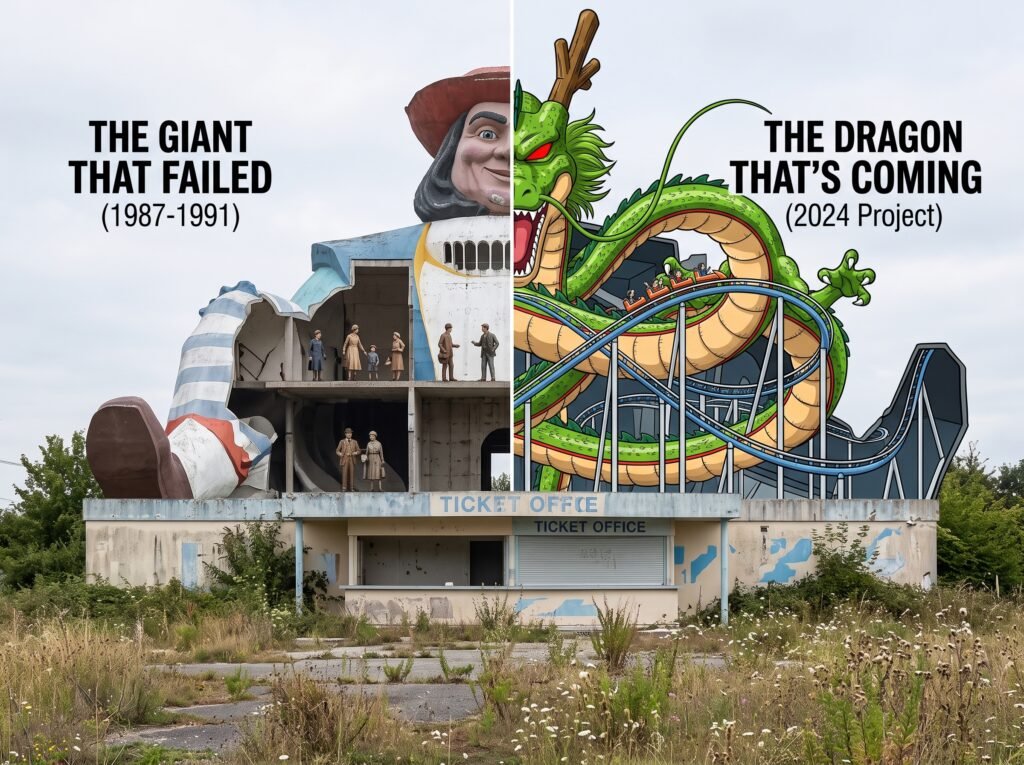
France has four theme parks over a million visitors. The Dragon Ball Park France project wants to build a fifth, on the exact field that already swallowed a Saudi-funded park.
Every town has a lot like this. A field, a parking area, a building on the edge of somewhere, where a big idea went in and never came out. Nobody builds on it again. The weeds do their work, and people drive past saying that used to be something without quite remembering what.
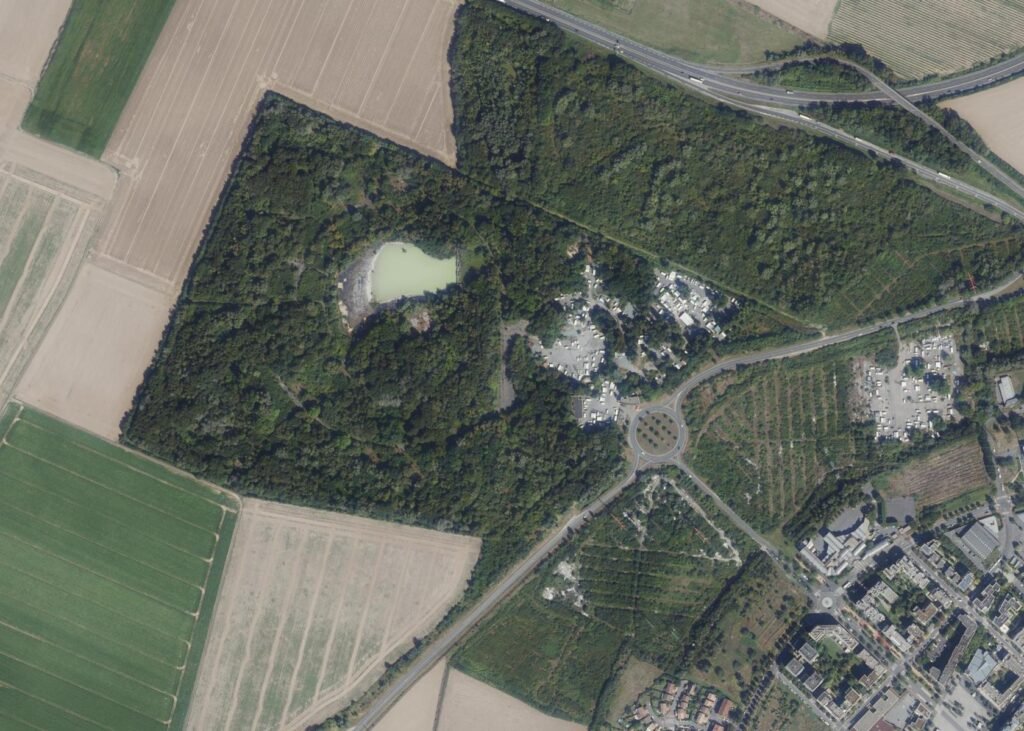
Outside Paris there is a fifty-five-hectare version, in Courdimanche, on the western lip of Cergy-Pontoise. Old entrance gates. The concrete footprint of a ticket office. Ride foundations somewhere under thirty years of vegetation. It sits less than a kilometre from the end of the RER A, which is the part that matters to everyone who has ever looked at it and done sums.
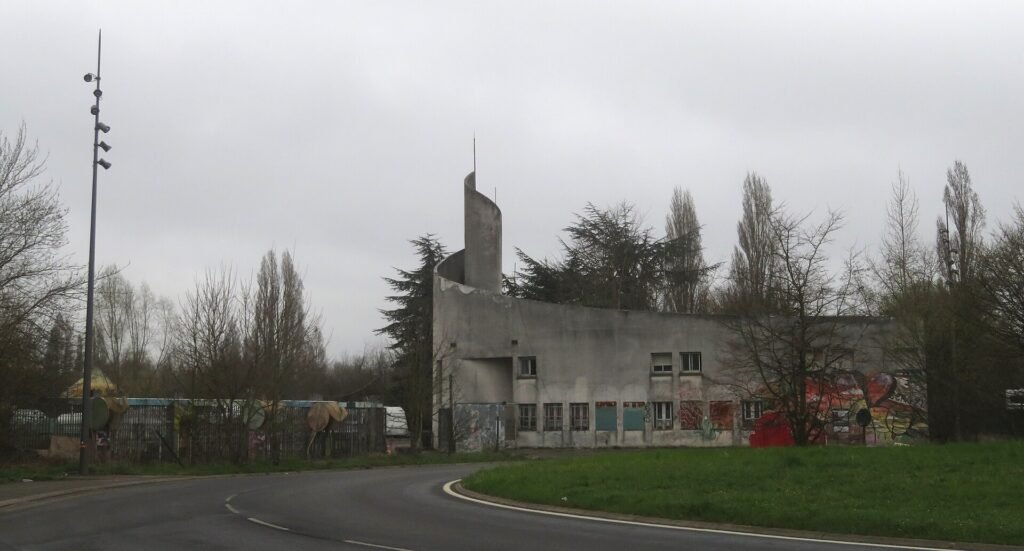
They’re building on it. Six billion euros, three theme parks, twenty-two thousand direct jobs, announced by Emmanuel Macron and the Saudi crown prince.
The project started, according to one of Macron’s own advisors, in a room in Riyadh in December 2024, when the President of the French Republic and Mohammed bin Salman discovered they both like Dragon Ball Z.
That is a better origin story than most infrastructure gets.
The number Macron reached for
“Du jamais vu depuis Disneyland Paris.” Nothing like it since Disneyland Paris.
He picked the right comparison, and it’s worth knowing what he was comparing against. Here is the entire list of theme parks in France that draw more than a million visitors a year.
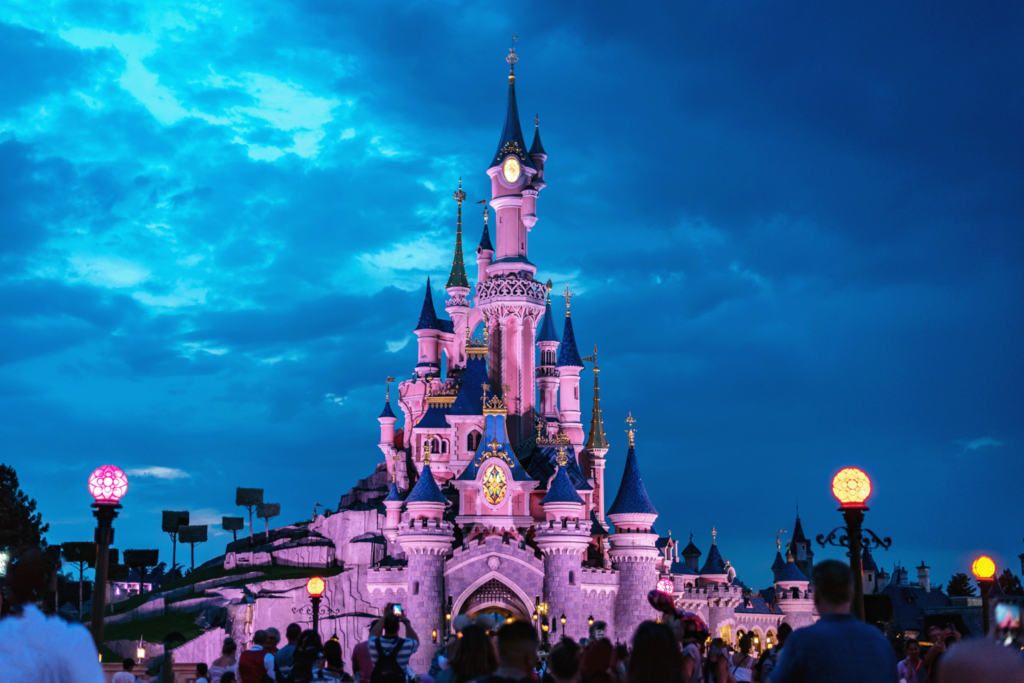
1. Disneyland Paris: 15,812,000
Marne-la-Vallée. Two parks stacked: 10,214,000 for Disneyland Park, 5,598,000 for Walt Disney Studios. The most visited theme park destination in Europe, and it isn’t close.
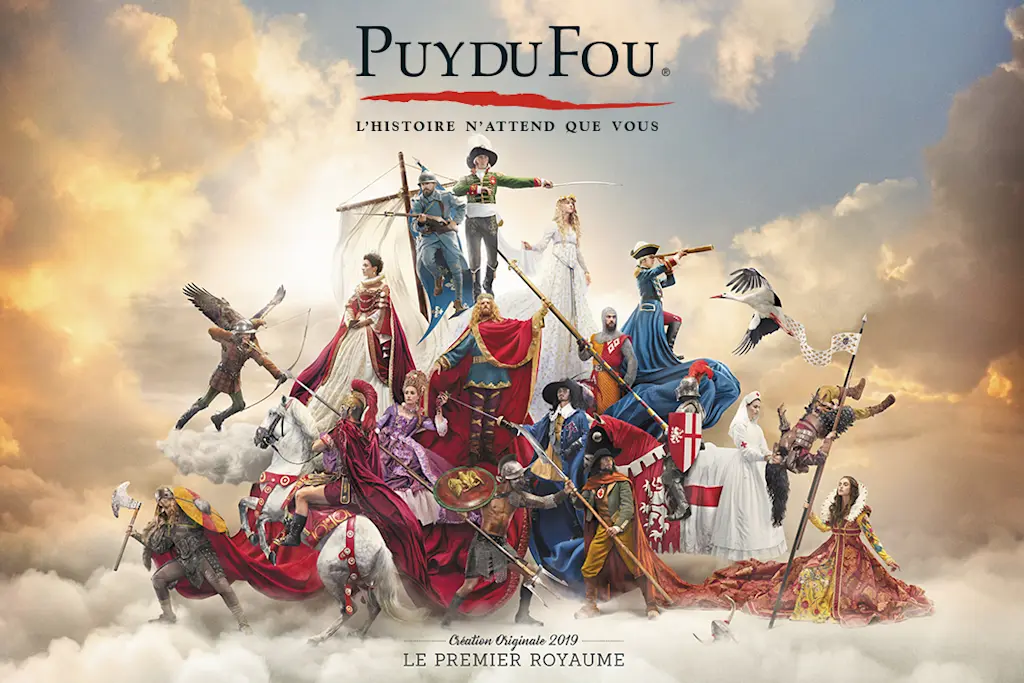
2. Puy du Fou: ~3,000,000
Les Epesses, in the Vendée. Broke three million in 2025. No roller coasters to speak of, no licensed characters, no imported IP. Historical spectacle, performed by people, about France. The most successful entirely French park in the country.
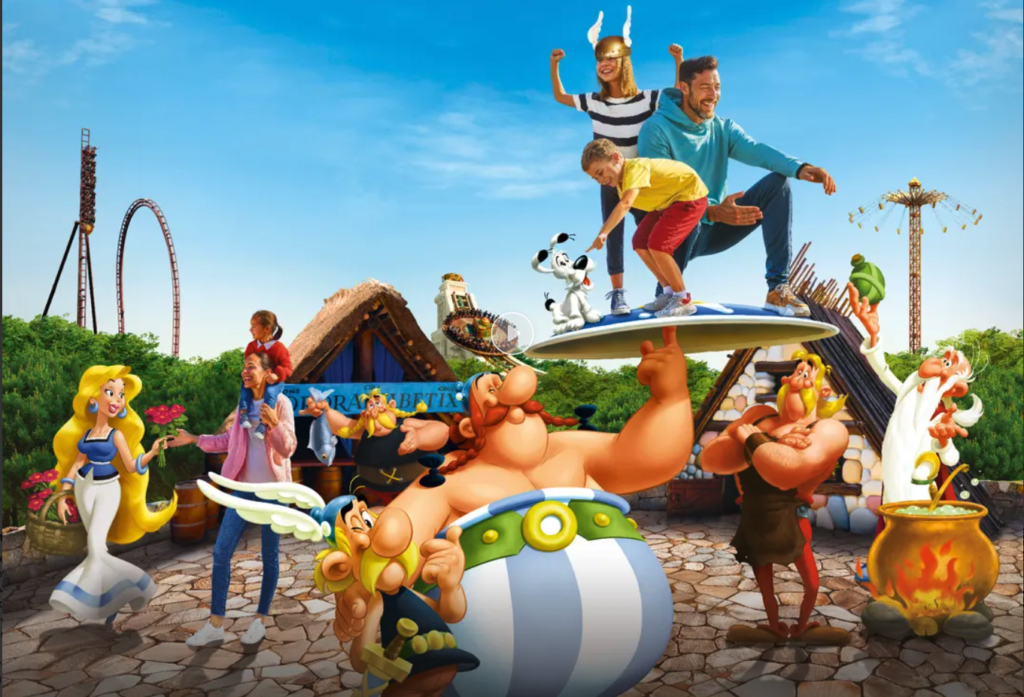
3. Parc Astérix: 2,900,000
Plailly, thirty-five kilometres north of Paris. A record year, again. It has been quietly breaking its own numbers for a decade.
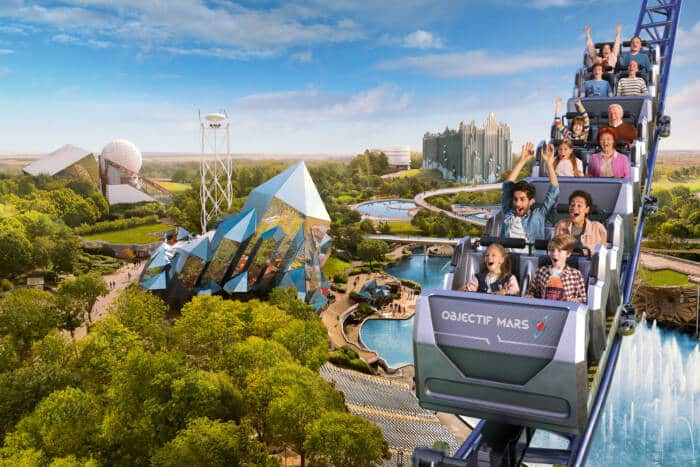
4. Futuroscope: 2,600,000
Poitiers, with the new Aquascope water park folded into the count.
That’s the list. That’s all of it.
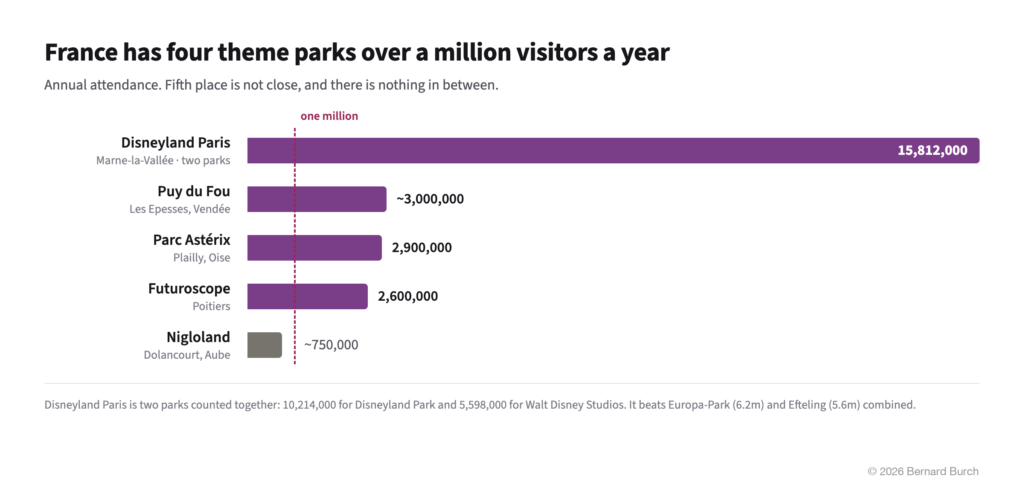
Fifth place is Nigloland, in the Aube, at roughly 750,000. The drop from fourth to fifth is seventy percent. France has four parks in the millions and then a long flat plain of regional parks in the hundreds of thousands, most of them family-owned, most doing fine, none of them anywhere near this conversation.
For scale outside France: Europa-Park in Germany does 6.2 million, Efteling in the Netherlands 5.6 million. Disneyland Paris beats both of them combined.
So a new entrant near Paris aiming at that top shelf is aiming at four objects, one of which is the largest attraction in Europe, sitting on the opposite side of the same metropolitan region.
What’s actually coming: Dragon Ball Park France
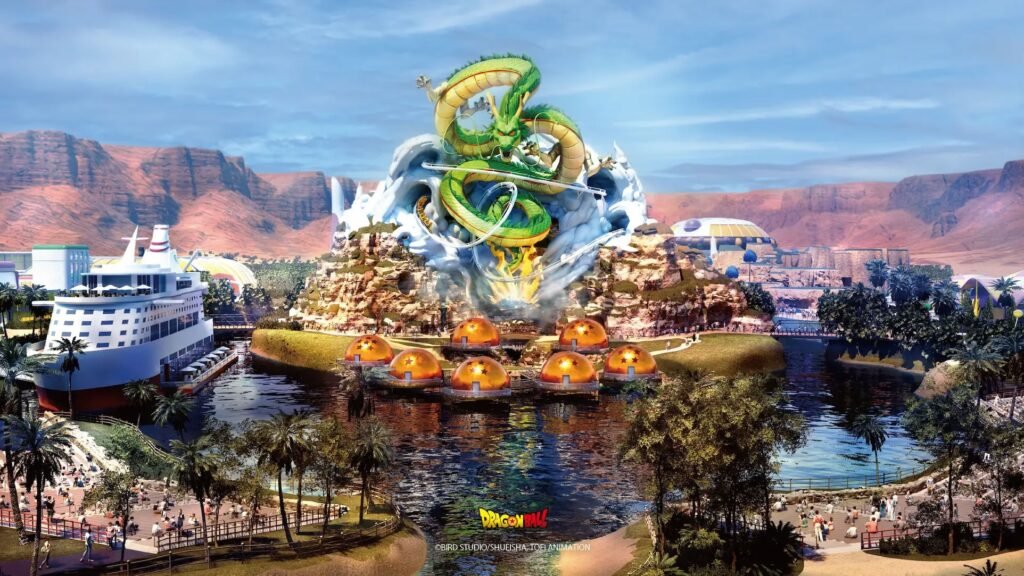
One of the three parks is Dragon Ball. The other two have no announced theme at all. Not “details to follow.” Nothing. Three parks, one revealed, two sealed.
We do know what the Dragon Ball one might look like, because Qiddiya is already building the original in Saudi Arabia and put the drawings out in March 2024, with a licence from Toei Animation. Five hundred thousand square metres. Seven themed zones, one for each Dragon Ball, recreating Kame House, Capsule Corporation, Beerus’s Planet. Thirty-plus attractions, five of them headline rides. Hotels and restaurants so nobody has to leave.
And a seventy-metre Shenron, the wish-granting dragon, with a roller coaster running through the inside of him.
Hold onto that last one.
Puy du Fou answered
Nicolas de Villiers runs the number two park on that list, and he is the son of the man who built it. On 9 August he published a tribune in Le Figaro, the op-ed slot of the right-leaning daily, which is exactly where this argument was always going to land.
The line everybody quoted: “Rabelais cède la place à Dragon Ball. La Renaissance s’incline devant un enfant à queue de singe.” Rabelais gives way to Dragon Ball. The Renaissance bows before a child with a monkey tail.
The argument underneath it is real and it isn’t stupid. Riyadh, he writes, has understood that culture is the instrument of power par excellence, and is deploying it methodically under Vision 2030: cinema, sport, esports, everywhere the world’s popular imagination gets manufactured. “Ce n’est pas de l’argent qui cherche un placement, c’est une doctrine.” Not money looking for a return. A doctrine. The Saudi petrodollar, he writes, isn’t buying a fairground ride, it’s financing un récit, une mythologie, un point de vue civilisationnel, and it is doing it in France precisely because France stopped paying for its own.
Then he asks the question that ought to stop a Disney executive mid-sentence: N’est-ce pas Charles Perrault qui le premier inspira Walt Disney?
He also says outright that none of this is about setting civilisations against each other. Appreciating Japanese culture is une vertu indéniable. You can love the playwright Rostand and haiku at once.
Then, in that same sentence, he warns against l’exotisme oikophobe.
Oikophobia means hatred of your own home. Roger Scruton turned it into a political word, and the national-conservative right has carried it ever since. Dropped into that sentence, it aims past the government’s budget and at the character of the people who signed off on Goku.
Twice he calls Goku un enfant à queue de singe venu du bout du monde. A child with a monkey tail from the ends of the earth. That’s not neutral.
The English translation of the tribune drops oikophobe and keeps the rest.
Some of it lands anyway. He says Puy du Fou reached three million with no state aid whatsoever, and could invest the same sums announced for what he calls le parc nippo-saoudien. And when the model went to Spain, France stayed home: “nous n’y importons ni manga ni mousquetaire.” Puy du Fou España, outside Toledo, runs on Spanish heritage and Spanish legend. I have been to Puy du Fou twice in the Vendée and once in Spain, and on that specific point he is simply right. The Spanish park is Spanish. He is arguing for localisation, not for shutting the door.
The list half-answers him regardless. Of the four French parks over a million, two run on French material: his own history spectacle and Astérix’s French comic book. French stories are not losing. They hold half the top four.
He is also, so far, the only one of the four to say anything at all. Parc Astérix and Futuroscope belong to the same listed operator, Compagnie des Alpes, which has stayed quiet at group level; the boss of its Walibi parks called the project competition but mostly an opportunity that strengthens the sector. Valérie Pécresse told TF1 the region had been working on it for eighteen months and put it “on the scale of Disney.” A number of Val-d’Oise elected officials are considerably less delighted and are asking for real consultation before anything is signed on their territory.
Disney, the one operator with something genuinely at stake, has said nothing i can find.
But Rabelais is a strange name to reach for. Because of what used to stand on that exact field.
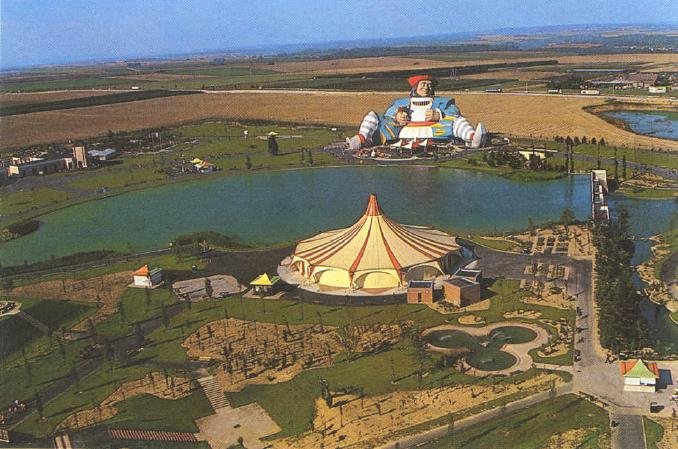
Gargantua
Mirapolis opened on 20 May 1987 in Courdimanche, on those same fifty-five hectares, bought for twenty-six million francs. Jacques Chirac, then Prime Minister, cut the ribbon.
It was France’s first attempt at a large-scale theme park and its subject was French literature: La Fontaine’s fables, Dame Tartine, the drowned city of Ys. The company behind it, Paris-Parc, had been created two years earlier with the architect Anne Fourcade.
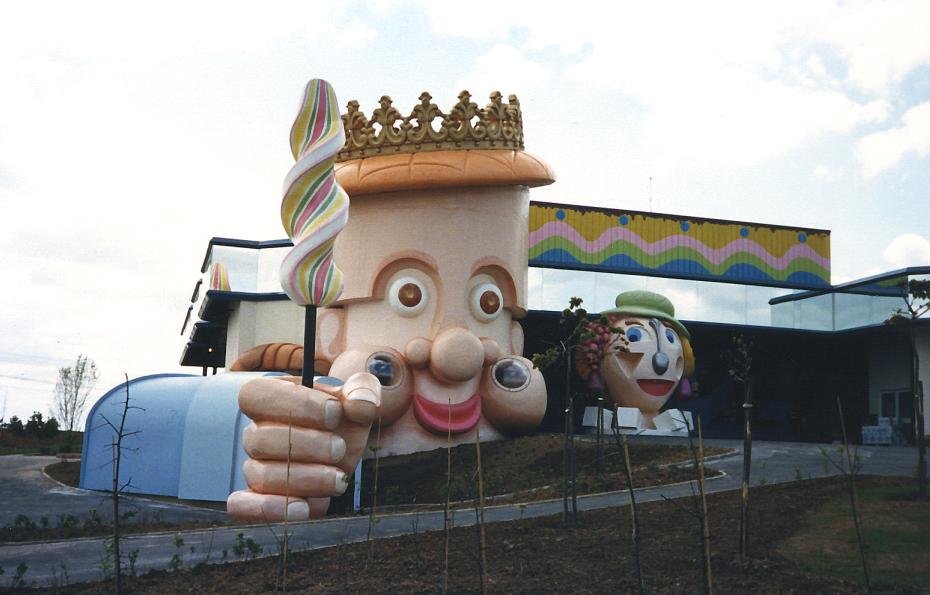
At the centre stood a thirty-five-metre statue of Rabelais’s giant. You went inside him. The ride carried you through Gargantua’s interior, which is either wonderful or unbearable depending on how old you were.
Mirapolis is remembered as the park nobody came to. In 1988, its first full season, it drew a million visitors. By the standard i’ve just spent a thousand words laying out, Mirapolis briefly qualified.
Then 640,000 in 1989. Then the collapse. Bad weather in the opening months with almost everything outdoors, tickets at 100 francs for an adult and 70 for a child, and a premise that asked a family from Val-d’Oise to have opinions about sixteenth-century satire. Paris-Parc filed on 22 January 1990 with 330 million francs of accumulated losses. Crédit national put in another 115 million to take the keys. The forains ran it for two more seasons. It shut for good on 20 October 1991, five seasons in. De Villiers has his own diagnosis, and it is a good one: pensé par des cerveaux d’experts plutôt que par des cœurs d’artistes. Thought up by expert brains instead of artists’ hearts.
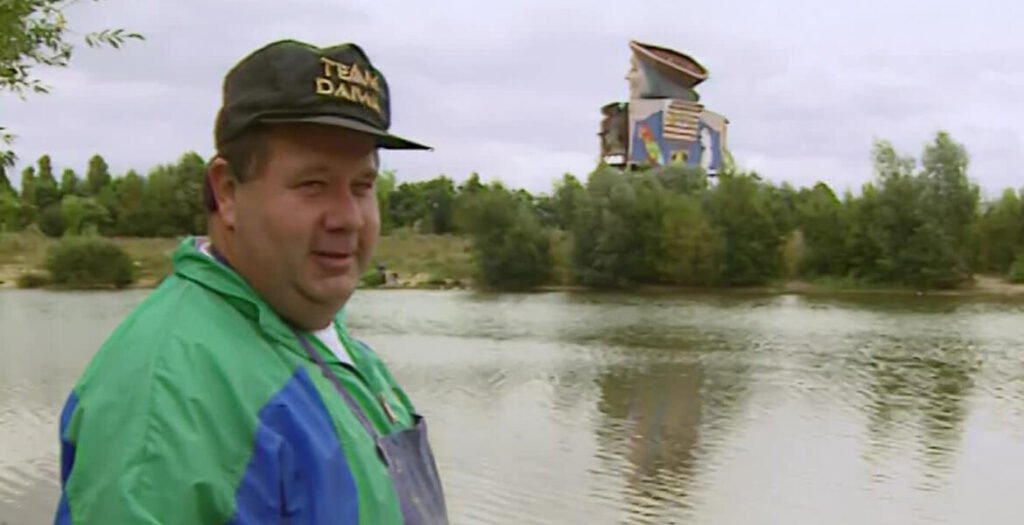
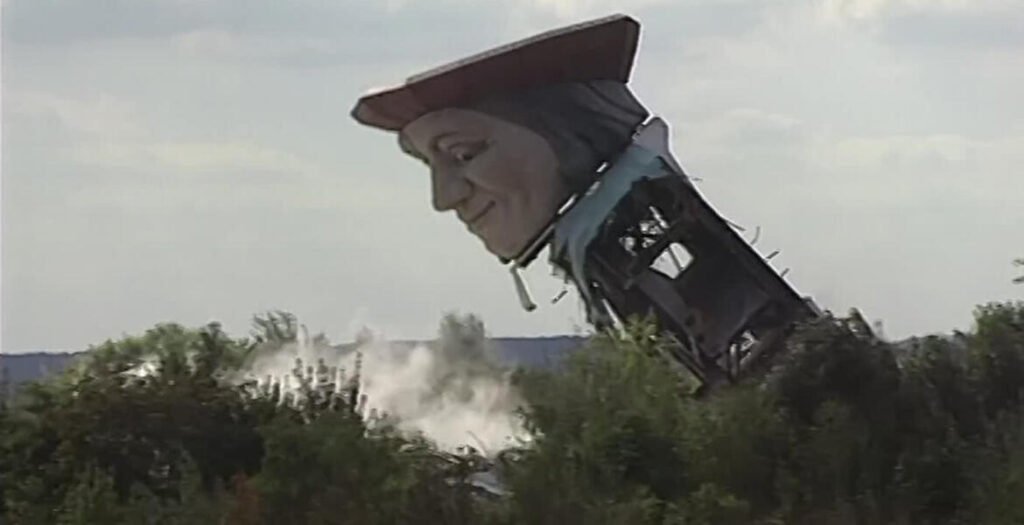
The rides were sold across Europe, thirteen of them to Spreepark in Berlin, which then also went bankrupt, which tells you something about the industry or about Gargantua. On 31 August 1995 they packed the giant’s base with explosives and brought him down.
The man who paid for it
Mirapolis was financed, from 1984, by a Saudi businessman named Ghaith Pharaon.
Not a coincidental Saudi. Pharaon was born in Riyadh in 1940, the son of Rashad Pharaon, physician to King Abdelaziz ibn Saud and later Saudi ambassador to France. He was educated at the Colorado School of Mines, Stanford, and Harvard Business School, and he built an industrial fortune on Attock Oil and Attock Cement. His group, Interedec, held fifty-five percent of Mirapolis’s equity, alongside the Caisse des dépôts, Compagnie générale des eaux, Club Med and Jean Lefebvre. In the same decade he bought the French grocery chain Félix Potin and a château in the Dordogne.
He was also a major shareholder in the Bank of Credit and Commerce International, and its representative in the United States. When BCCI collapsed in 1991 in what remains one of the largest bank frauds in history, Pharaon was indicted in the US. The Federal Reserve fined him thirty-seven million dollars for secretly taking over American banks, and he lost his challenge to it. He never came back to answer the indictment. He spent the next twenty-six years wanted by the FBI and Interpol, and died in Beirut in January 2017, aged seventy-six, having never stood trial.
So the ledger on that field reads: a Saudi fortune builds a monument to French literature, the park fails, the money turns out to have been standing next to the biggest banking fraud of the century, the giant is dynamited, the land goes back to weeds.
And now a Saudi sovereign wealth fund would like to build a seventy-metre dragon on the same ground.
This is not even the second time
In 1994, Euro Disney was drowning. Three point seven billion dollars of debt, attendance below plan, and the phrase Tchernobyl culturel already loose in the French press. The rescue came from Prince Al-Waleed bin Talal, who took twenty-four percent of the company that June and pledged up to half a billion dollars, a hundred million of it for a convention centre.
His holding company stayed on the share register for twenty-three years. Disney bought it out in February 2017, on the way to taking Euro Disney private with more than ninety-seven percent of the shares.
So the park at number one on that list, the benchmark Macron reached for, the one everybody treats as proof that enormous foreign entertainment can work in France, was kept alive by Saudi money for most of its existence.
De Villiers is arguing that Saudi capital has arrived to displace the French story. Saudi capital paid for the French literature park in 1987 and rescued the American one in 1994. It has been here the whole time. Now it wants its name on the gate.
What the money was worth
The whole of Mirapolis, land and park and giant, cost somewhere between five hundred and seven hundred million francs.
Run that through the currency change and thirty-eight years of French inflation and you get €150 to €210 million in today’s money. The losses that killed it, 330 million francs, come out at about €99 million. The hundred-franc adult ticket that locals thought was outrageous works out to about €30, which today would make it one of the cheaper days out in the Paris region.
Qiddiya is talking about six billion euros.
That is somewhere between twenty-eight and forty times what France’s first theme park cost to build and lose. The Dragon Ball park alone, on the French figures circulating, is over a billion, five to seven times the entire Mirapolis project on its own.
Twenty-two thousand jobs
The announcement promises twenty-two thousand direct jobs.
Disneyland Paris, the largest tourist attraction in Europe, running two parks, seven hotels, a golf course and a shopping district off 15.8 million visitors a year, employs nineteen thousand five hundred people, ninety-one percent of them on permanent contracts. It is the biggest private employer in Seine-et-Marne.
Qiddiya is projecting a workforce about thirteen percent larger than that, for three parks that do not exist, on a field that currently has four hundred people living on it.
Maybe the number holds up. Watch it anyway. It’s the figure that makes all the others sound reasonable.
Who owns the field
This is where the press releases go quiet.
The land has belonged since December 2019 to a company called SNC Cergy, a vehicle of the Montpellier property developer Océanis Promotion, connected to the UXCO group. SNC Cergy has share capital of €1,500. It posted €1.37 million of losses in 2022, has negative equity, and lost its financial partner in January 2024. Its own plan for the site—an eco-village on 9.6 hectares, 150 cottages, 351 coliving units, a spa—has not been built.
The rest of the field is not empty either. Roughly four hundred gens du voyage, the French legal category for the country’s traveller communities, have lived on about thirty of the fifty-five hectares since 2017. Surveys have found thirty-nine protected species, nearly six thousand square metres of wetland, mercury and naphthalene in the soil, and a hydrocarbon pipeline running through it.
Somebody is going to have to buy that land, clear it, decontaminate it, and move four hundred people. None of those four things was in the announcement.
Whether this one lands
The differences from 1987 are real. Six billion euros against something like two hundred million. A globally licensed property with an audience that already exists, instead of asking Val-d’Oise to care about Dame Tartine. Thirty years of Disneyland Paris proving the catchment works, if not the balance sheet: six point eight billion dollars invested since 1992, thirteen profitable years out of thirty-four, one dividend ever, ten point two million dollars, paid in 1993.
The warnings are also real, and local. EuropaCity, a €3.1 billion complex planned twenty kilometres away in Gonesse, was abandoned in 2019 after environmental opposition and litigation, on land far less complicated than this. And Qiddiya’s own Six Flags park in Saudi Arabia was promised for 2022 and opened on the last day of 2025.
And there is a detail nobody has made anything of yet. Disneyland Paris sits at Marne-la-Vallée–Chessy, the eastern terminus of the RER A. Courdimanche sits beside Cergy-le-Haut, the western terminus of the same line. If Qiddiya builds this, the biggest theme park in Europe and the newest one in France will be bookends on a single train, eighty-seven minutes and twenty-eight stations apart, with the whole of Paris in between.
De Villiers is worried that Rabelais is being replaced by Dragon Ball. On that particular field, Rabelais went first, thirty-five metres tall, paid for by Saudi Arabia, and the ground took him in 1995.
Gargantua’s whole thing, in Rabelais, was that he ate everything.
The field has form.
Sources:
- Déclaration commune de la France et de l’Arabie saoudite (Élysée, official statement)
- France, Saudi Arabia green light $7 billion Dragon Ball Z theme park — CNBC
- Macron unveils €6bn Saudi-backed theme park deal amid rights criticism — Euronews
- Saudi Arabia to invest €6 billion in theme parks near Paris — France 24
- France, Saudi Arabia agree on $7bn theme park project near Paris — Al Jazeera